LYNXED
Blog / explainer
Roguelike vs roguelite: what's the difference?
A roguelike is a game built like Rogue (1980): procedurally generated levels, permanent death, and usually turn-based movement on a grid. A roguelite keeps the random runs and the death but adds meta-progression, something that carries over between runs so the next attempt starts stronger or with more options. In short, a roguelike resets you completely, and a roguelite lets you keep something.
Where the word comes from
Rogue was a 1980 dungeon crawler drawn in text characters. You went down through randomly generated levels, and when your character died, the save was gone. Games that copied its formula, like NetHack and Angband, came to be called "roguelikes": games like Rogue.
For decades that was a small genre. Then, from the late 2000s, many popular games borrowed Rogue's random runs and permanent death but dropped the turn-based grid. Some added unlocks that persist. People needed a word for them, and "roguelite" (also spelled "rogue-lite") stuck.
The Berlin Interpretation
In 2008, developers at the International Roguelike Development Conference in Berlin wrote down what a roguelike is. They called it the Berlin Interpretation. It lists factors rather than strict rules.
High-value factors (the core of the genre):
- Random environment generation. Levels are made fresh for each game.
- Permadeath. When you die, you start over with a new character.
- Turn-based. Nothing happens until you act.
- Grid-based. The world is made of tiles, and you move one at a time.
- Non-modal. Every action is available in the same mode, with no separate battle screens.
- Complexity. Many ways to solve the same problem.
- Resource management. Limited food, potions and ammo.
- Hack'n'slash. Fighting lots of monsters is central.
- Exploration and discovery. Finding out what the unidentified items do.
Low-value factors include a single player character, monsters that follow the same rules as you, tactical challenge, ASCII graphics, dungeons, and visible numbers for stats.
Its authors meant it as a description of games like Rogue, NetHack and Angband, not a law. Today many developers treat it as history. It's still the clearest checklist for the strict meaning of "roguelike".
What makes a game a roguelite
The one difference people agree on is meta-progression: anything you keep after you die. It comes in two flavors.
- Power. Permanent stat boosts, so the next run starts stronger.
- Breadth. New items, characters or routes unlocked for future runs, so the next run has more options but not necessarily more strength.
Most roguelites also drop the turn-based grid for real-time action. That's why the label covers so many genres: platformers, shooters, deckbuilders.
Examples from well-known games
| Game | Real-time? | What carries over |
|---|---|---|
| Rogue (1980) | No | Nothing |
| NetHack | No | Nothing |
| Spelunky | Yes | Almost nothing. Shortcuts are the main thing you keep. |
| The Binding of Isaac | Yes | New items and characters, unlocked by achievements |
| Enter the Gungeon | Yes | Hegemony Credits buy new items into the pool |
| Rogue Legacy | Yes | Gold buys upgrades to your manor, inherited by each new heir |
| Dead Cells | Yes | Cells unlock blueprints and permanent upgrades |
| Slay the Spire | No, turn-based | Cards and relics unlock as you play; Ascension levels add difficulty |
| Hades | Yes | Darkness buys permanent upgrades at the Mirror of Night |
A few things stand out:
- Slay the Spire is turn-based but has no grid. It meets some Berlin factors and not others.
- Spelunky has almost no meta-progression but is real-time. By the strict definition it isn't a roguelike, and it barely fits the loose definition of a roguelite. The labels are fuzzy at the edges.
- Hades and Rogue Legacy are the clearest roguelites. You get stronger between runs, and the games are built around that.
A quick test
Ask three questions about any game:
- Are runs randomly generated? If not, it's neither.
- Does death end the run for good? If you reload a save, it's neither.
- Does anything carry over to the next run? If nothing does, it's a roguelike, or close to one. If something does, it's a roguelite.
In everyday use, many people call all of these "roguelikes", and that's fine. The difference matters most to people deciding what kind of challenge they want. A pure roguelike asks you to get better. A roguelite lets the game get a little easier while you do.
Where XENO // BREACH sits
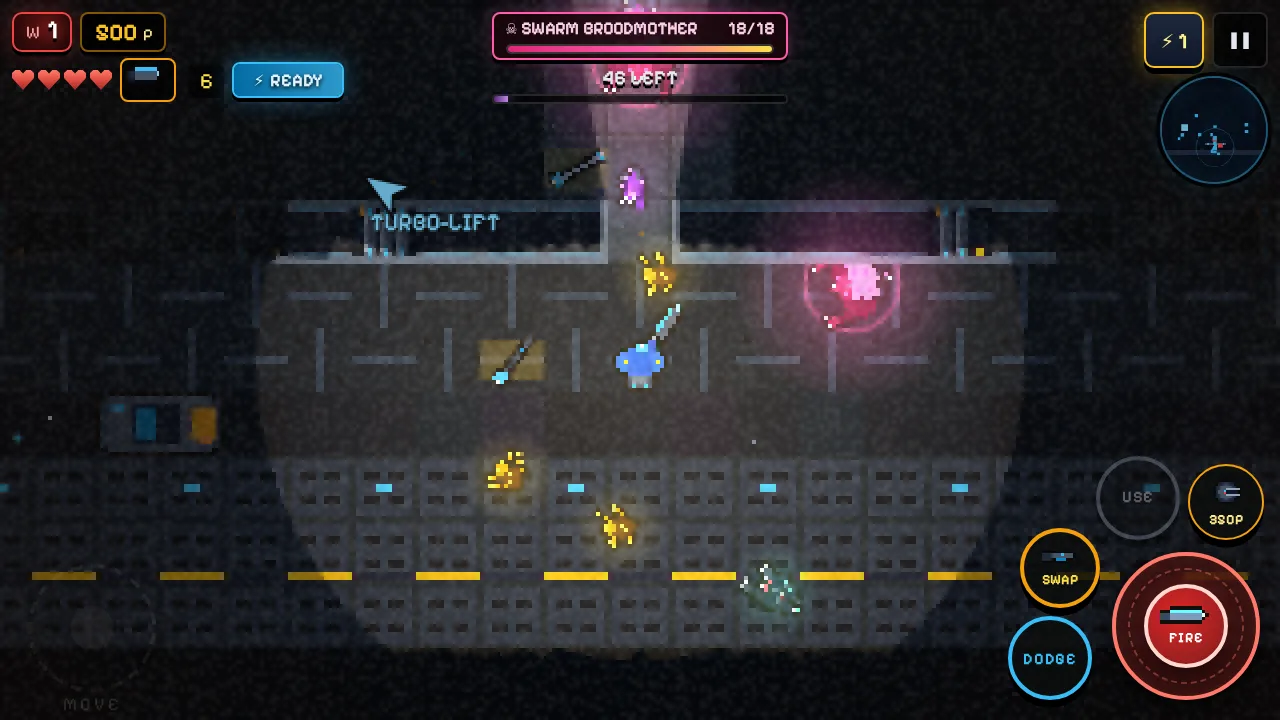
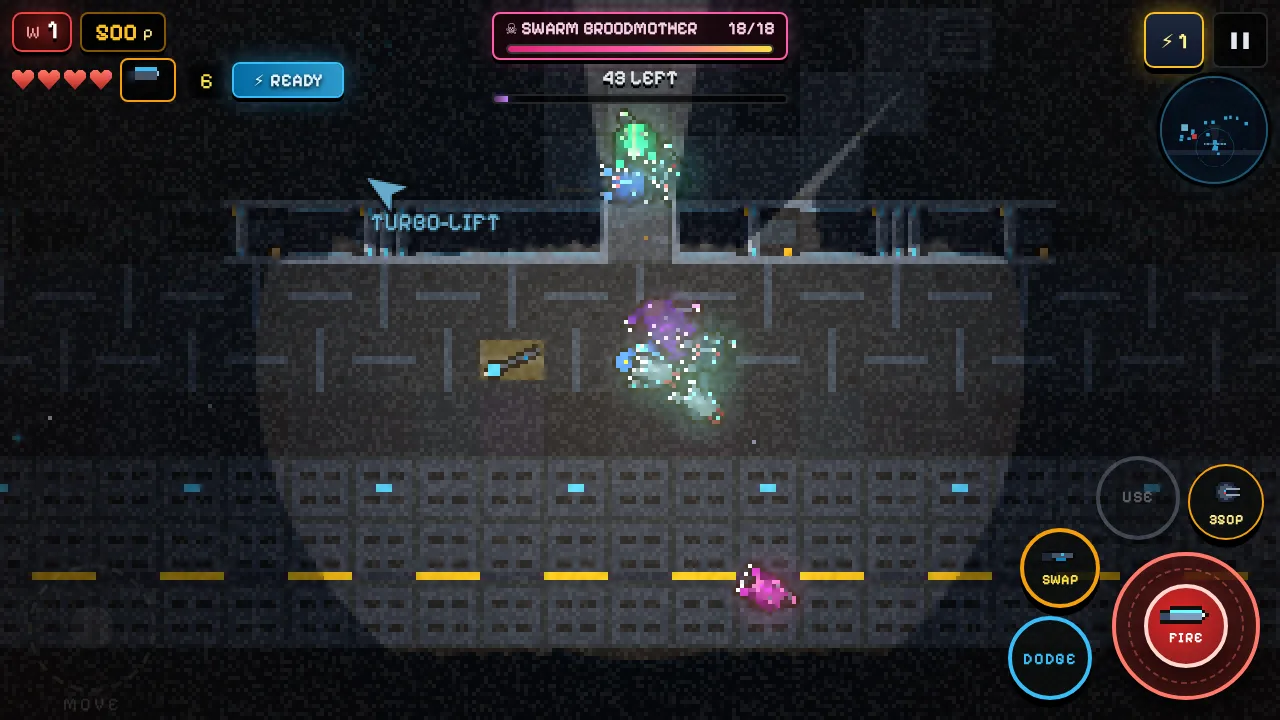
XENO // BREACH, our sci-fi horror shooter, is a roguelite.
- Random generation: yes. Each run lays out the decks of the U.S.S. Aethelgard from a new seed.
- Permadeath: yes, for the run. Die and your points, skill trees, turrets and forged weapons are gone.
- Turn-based, grid-based: no. It's a real-time top-down shooter.
- Resource management: yes. You juggle points, Hull Plates for welding vents, and ammo.
- Meta-progression: yes. Every wave you clear earns a Xeno Core, and every boss two. They stay after death. You spend them in the Xeno Vault on permanent upgrades: an extra starting armor heart per level, 7% more speed per level, or a starting gun that comes pre-forged.
The power it hands you is small next to what you build inside a run. A single wave clear gives you a skill point. Each Vault level gives a nudge, so the climb still comes down to how you play.
FAQ
Is a roguelite an easier roguelike?
Usually it's more forgiving, because you keep something when you lose. Many roguelites are still very hard. Meta-progression changes how losing feels more than how hard winning is.
Is "roguelite" the same as "rogue-lite"?
Yes. Same word, two spellings.
Is Hades a roguelike?
By the Berlin Interpretation, no: it's real-time and has meta-progression. It's commonly called a roguelike anyway. "Roguelite" is the more precise word.
Are roguelikes always hard?
They're built around losing and trying again, so most are demanding. Difficulty varies a lot between games.
Want to feel the difference yourself? Play XENO // BREACH free in your browser, and see your first run for how its runs work.